Farm Life Fridays

Farm Life Fridays – Goodbyes

This week has been a sad one.

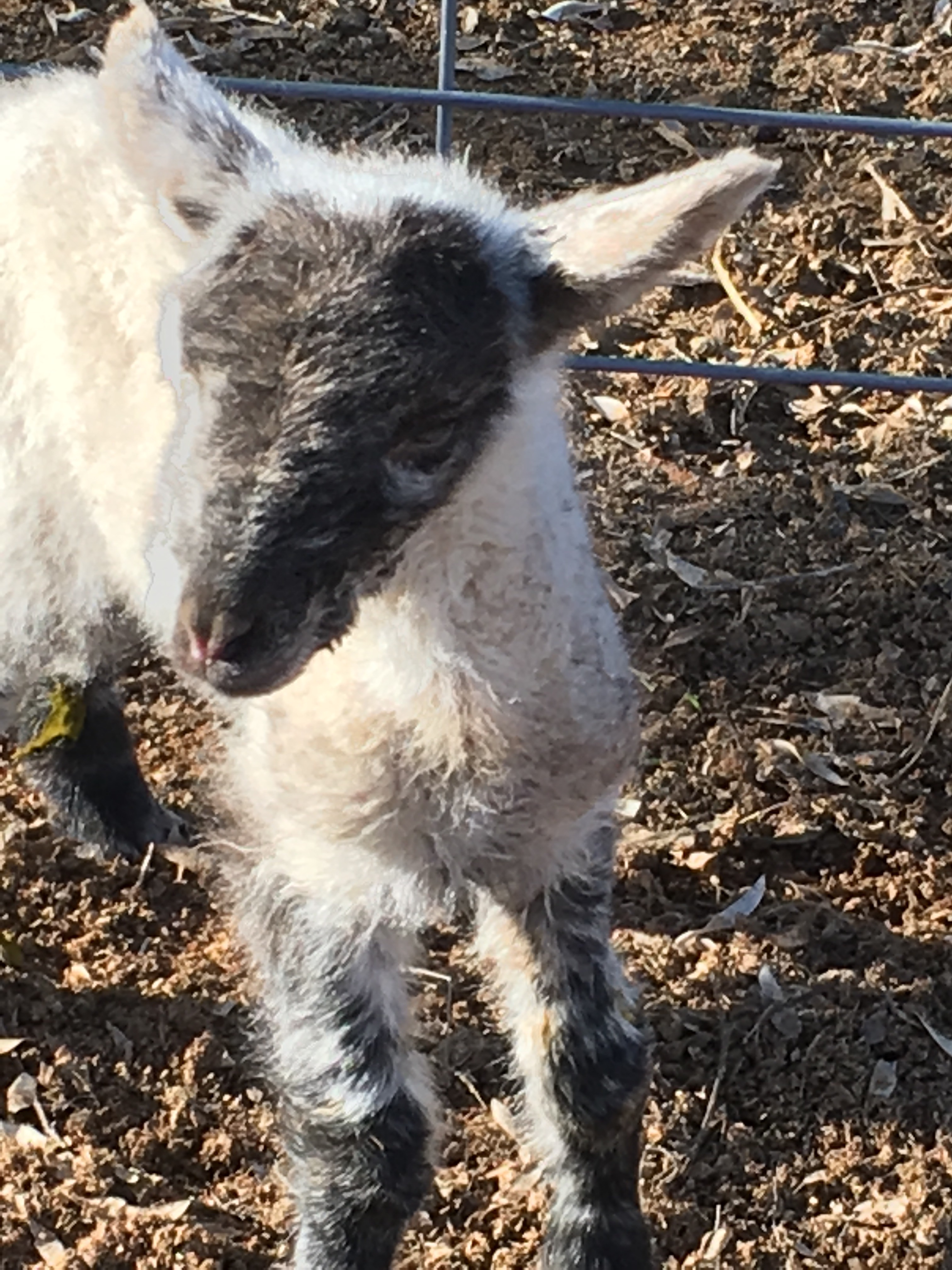
On Sunday we said goodbye to our little lamb Fluffy.

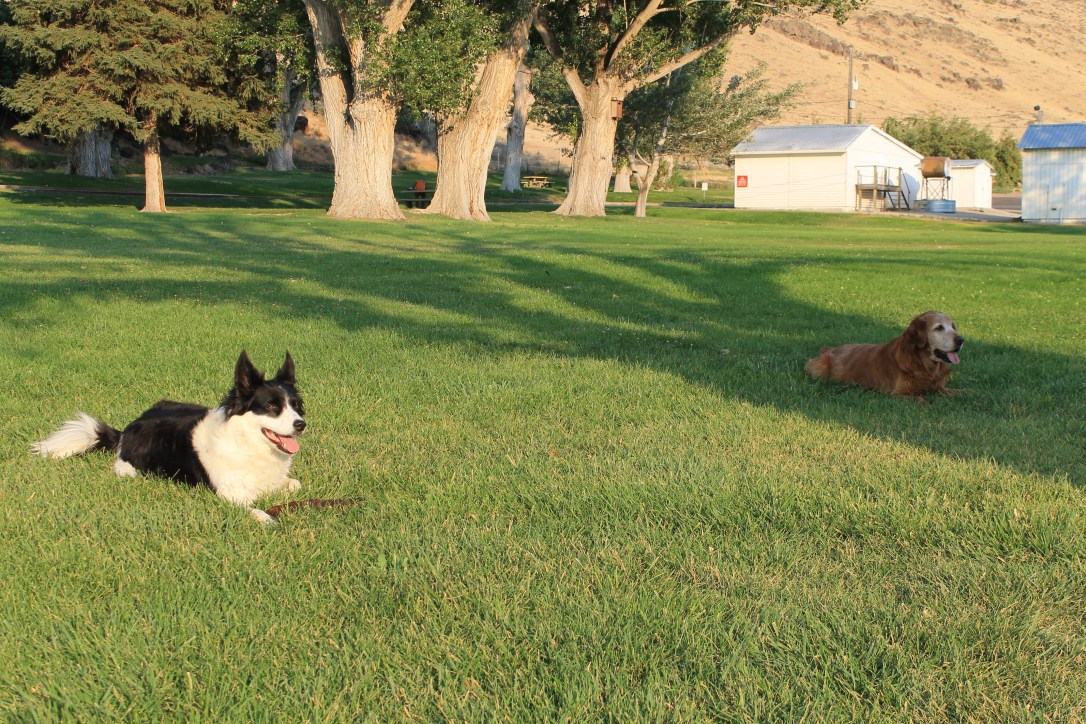
On Monday we said goodbye to our sweet Miss Annie.   She was 14 years old and had lived a good life, but saying goodbye to her was beyond difficult.

She has always been a part of our family.

She was the bride’s maid at our wedding.Wedding 3

And she managed to photo bomb the anniversary photos that followed.  IMG_1625

She welcomed both of our babies home.  Well she thought Dustin was a squirrel at first…but she had things figured out by the time Clayton got here.   

img_1872

Speaking of squirrels…she killed at least two trees defending our home from any, and all squirrels who dared to taunt her.

She’s killed a few chickens, and hid about 60 muskrat furs.  But always she loved and was loved.

Goodbye Miss Annie….we will miss you baby girl.
IMG_0366
We are certain she and Jenny are romping around in heaven!!!!!
Sacred Sundays

Sacred Sundays – A Lesson in Perfection turned Eulogy

One cannot engage in a scriptural study of Jesus Christ without encountering his words in Matthew 5: 48 and 3 Nephi 12: 48.  

Therefore I would that ye should be perfect even as I, or your Father who is in heaven is perfect.  3 Nephi 12: 48

I know I am not the only one who is overwhelmed by this command.   

I see going from this:

To this:

Source: http://weddingsparrow.com/article/spring-bridal-inspiration-baby-lamb/

And I wonder: How do I get there?   

I am learning it is a process.   

We begin by learning about Him. “It is impossible for [us] to be saved in ignorance.” The more we know about the Savior’s ministry and mission–the more we understand His doctrine and what He did for us–the more we know that He can provide the power that we need for our lives.   Russell M. Nelson

I am learning not to compare, but to put things in perspective.   

“Perspective is a giver. Comparison takes. Perspective is generous. Comparison pares down the loveliness of your life until it appears a thin shred of its former glory. Perspective carries us through life laughing. Comparison evokes cursing and frowns and grumbling.”

Excerpt From: Merrick, Kate. “And Still She Laughs.” HarperCollinsPublishers, 2017-02-10. iBooks. 

This material may be protected by copyright.

Check out this book on the iBooks Store: https://itun.es/us/v8_peb.l


I am learning to be humble.


I am learning…life gives us interruptions… the unexpected.   In those moments you drop everything.  You run to the rescue.  You pray.  You hold on to hope.  You comfort.  You mourn.  


You learn to continue in faith.  

Goodbye Fluffy.  You were perfect in your own straggly, scrawny little way.    Thank you for blessing our lives with laughter and lessons.  We will miss you!

Farm Life Fridays

Farm Life Fridays – Living Our Dreams

Two dreams to share with you tonight.

It is strange to think that last year at this time we just had a dream. It seemed like an improbable dream.   But…

d0d6e2f4cf7e0eb619fb5458df04ab97
Image Credits


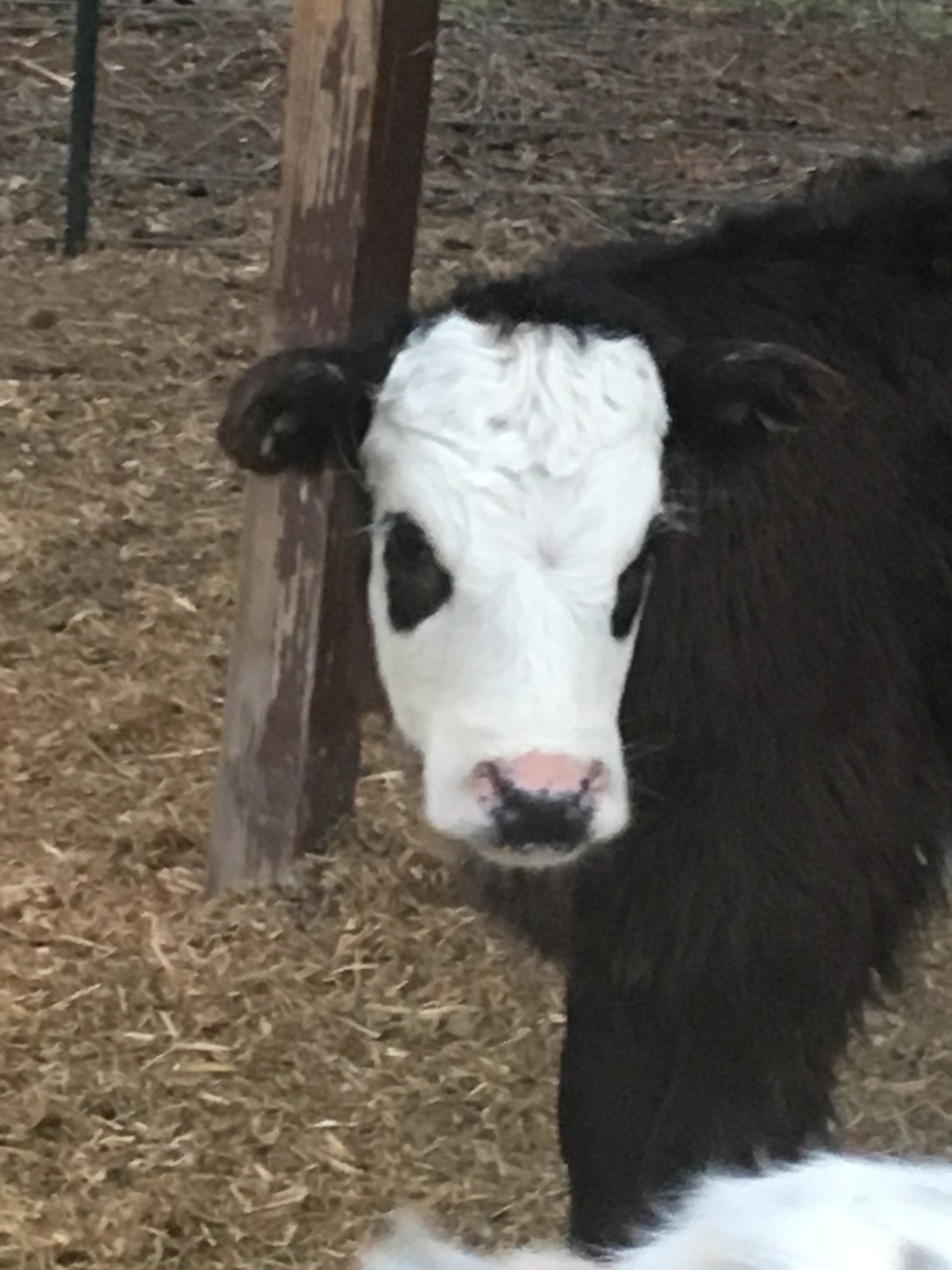
For years I have dreamed of naming a little girl Calliope Jane.  But I have been blessed with two little boys instead.  Still It was sad to know I would never get to use that name.   Sad to know that some dreams are just not realized.  But then today we welcomed a new little girl to the farm.

IMG_1019Welcome home Calliope Jane…Or if you prefer Cow.lie.o.(the black-eyed).pea Jane.   The name just suits her.  Don’t you think?
Keep dreaming friends!

Teaching Tuesdays

Teaching Tuesdays – In Summary

Our focus this year has been summarizing.  We have placed additional emphasis on using summaries to increase student learning in mathematics.

Today was our instructional rounds.  Administrators and coaches from throughout the district gathered at our school to observe in the classrooms and collect data related to 5 steps of summarizing.   These steps are:  comprehension, chunking, compacting, conceptualizing, and connecting.

I have struggled with the idea of summarizing in mathematics.   Not because I don’t think it is valuable, but because I am not sure what it looks like.   Today brought some clarity…I think.

Here are my thoughts…so far

  1.  Parts of mathematics  …the algorithms, conditional statements, and formulas, etc…. are summaries.   They succinctly describe how to solve problems and define relationships.  So we teachers need to consider what and how we are asking students to write summaries.
  2. Traditionally, we have made it easy on our students.  We have summarized the summaries, if you will.  We have explicitly taught the skill first then added the context.  If I were to change one thing about my past experience teaching mathematics, I would change this.   Instead of starting a lesson with a lecture, I would start with a task.   I would have the students then summarize their own thinking around the task.  Then collectively we would summarize a strategy related to a task.  And then, I would share the common algorithm or compare class thinking to common theorems or definitions.
  3. If/when I asked my students to summarize around a standard algorithm, I would expect the summary to actually add back in the extra details.  Thus summary does not equal less words…especially in mathematics.
  4. And the five steps of mathematical summary are more like an escalator in my mind.  It is difficult to distinguish where one step ends and the other begins.  You can slide right in to the next level without realizing it.
  5. For the sake of clarification though, this is how a see a summary of mathematical problem solving within the 5 step framework.
    • comprehension:  The student reads and understands the problem.  This might call for an explanation of vocabulary.  It might also prompt further questioning on the part of the student.
    • chunking:  Students generate a list of smaller steps or tasks.  Based on the questions they generated in the previous step.
    • compacting:  Students begin to answer questions and simplify the process.  They eliminate unnecessary steps in the name of efficiency.  They use variables and generate a general process for solving similar problems.
    • conceptualizing:  Students use examples or models to verify and illustrate their process.
    • connect:  Students write a statement to formalize the problem solving process.  In connection to this, the student explains why the process works.

So in summary, mathematics is about problem solving.  When we create algorithms or make conjectures and defend these with a valid but succinct argument, we are in effect summarizing our problem solving practice.

Update:  In a moment of reflectioon I wrote the following at an ELL training as I considered language as action.

A summary is stripped of all the hard work (language and mental processing) that comes with producing it! To give a summary outside of context is meaningless. To not ask students to engage in summarizing (writing), is a disservice. It renders the content meaningless.

Math Mondays

Math Mondays – A Farm Problem

So I have a real-life problem from our farm and I am wondering how to make it a three act task.  (If you are into organic farming you might want to look away…as I just said this is a real-life problem 😉 )

Dan Meyers describes these type of problems as tasks happening in three acts.

Act 1:  You introduce the central conflict of your story.   (Make it visual…use as few words as possible.)

IMG_0989
Acres and acres of weeds

Act 2:  The student looks for resources, asks questions and develops new tools…to overcome the problem.

Notice I said students, but for now I am just going to tell you the tools we have and the question we asked.

TOOLS:  200 gallon tank on a sprayer with a 30 foot span, 19 sprayer heads, each sprayer head disperses treatment at 0.36 gallons per minute, 3 pints of weed killer per acre, and the intention to drive 3.5 miles per hour

Our question:  How many pints of weed killer do we need to add to the 200 gallon tank?

Act 3: Resolve the conflict…and set up for a sequel.

                My work and Greg’s work

We both got the same answers.  YAY!!!!  And both used dimensional analysis…I love using dimensional analysis.

So what would be appropriate photos for acts 2 and 3?   What about photo 1?

And what would be a sequel?

And actually now that I think about it…it would be interesting to see the questions, resources and tools the more organic minded folks would ask/use.